
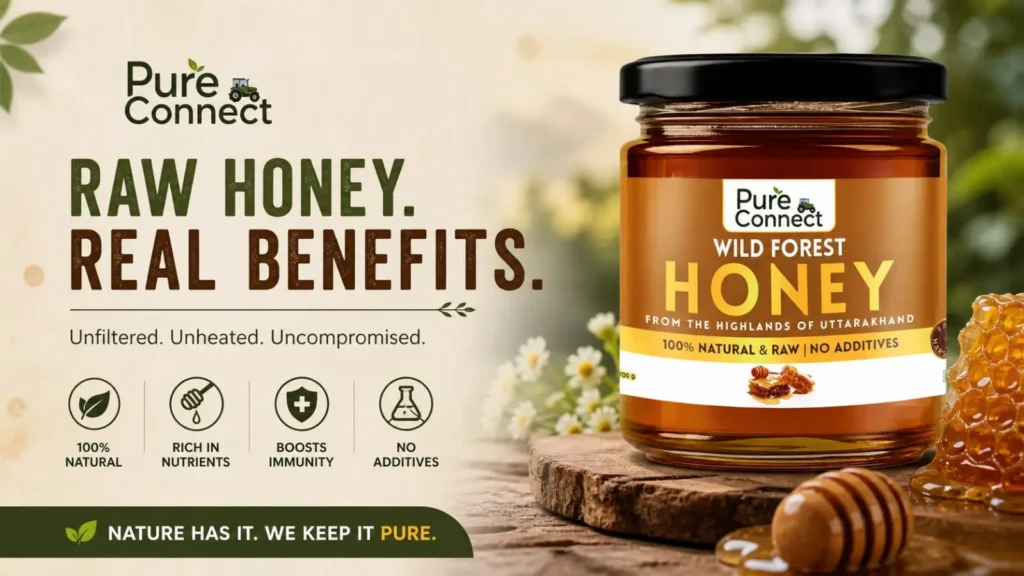
Honey has been cherished for centuries—not just as a natural sweetener, but also as a powerful health booster. But not all honey is created equal. While supermarket shelves are filled with neatly packaged, clear-looking honey, what many people don’t realize is that most of it is heavily processed.
If you’re trying to make a healthier choice for yourself and your family, understanding the difference between raw honey and processed honey is essential. In this blog, we’ll break down how filtration and heating impact honey, what nutrients are lost during processing, and why raw honey stands out as the better choice.
What Is Raw Honey?
Raw honey is honey in its most natural form. It is extracted directly from the honeycomb and minimally processed—usually just strained to remove large impurities like wax or dead bees.
Unlike commercial honey, raw honey is:
- Unheated or only gently warmed
- Unpasteurized
- Unrefined
- Rich in natural enzymes, pollen, and antioxidants
It may appear slightly cloudy or crystallized over time, but that’s actually a sign of purity—not a flaw.
What Is Processed Honey?
Processed honey, often labeled as “pure honey” in stores, goes through multiple steps before reaching your table. These include:
- High-temperature heating (pasteurization)
- Fine filtration
- Blending and sometimes dilution
The goal is to create a product that looks clear, smooth, and has a longer shelf life. However, this process significantly alters the natural composition of honey.
The Role of Filtration: What Gets Removed?
Raw Honey Filtration
Raw honey is only lightly filtered to remove visible particles. This ensures that beneficial components like pollen and enzymes remain intact.
Processed Honey Filtration
Commercial honey undergoes ultra-filtration, which removes:
- Pollen
- Tiny wax particles
- Natural enzymes
- Beneficial compounds
Why This Matters
Pollen is not just a random impurity—it’s packed with nutrients and can even help with seasonal allergies. Removing it strips honey of much of its natural value.
Filtered honey may look more appealing, but it loses the very elements that make honey beneficial.
The Impact of Heating: What Happens Inside Honey?
One of the biggest differences between raw and processed honey is heat exposure.
- Raw Honey
- Maintains its natural enzymes
- Preserves antioxidants
- Retains antibacterial properties
- Processed Honey (Pasteurized)
- Heated at high temperatures to improve texture and shelf life
- Destroys heat-sensitive nutrients
- Reduces enzyme activity
- Key Enzymes Lost During Heating
Raw honey contains enzymes like:
Invertase – helps break down sugars
Diastase – aids digestion
Glucose oxidase – responsible for antibacterial effects
When honey is heated excessively, these enzymes are either reduced or completely destroyed.
Nutrient Loss: What You’re Missing in Processed Honey
Raw honey is a powerhouse of nutrients, but many of these are lost during processing.
Nutrients in Raw Honey:
- Antioxidants (flavonoids and phenolic acids)
- Vitamins (B-complex, Vitamin C in trace amounts)
- Minerals (calcium, potassium, magnesium)
- Amino acids
- Natural enzymes
What Happens in Processed Honey:
- Antioxidants are reduced
- Enzymes are destroyed
- Nutritional value drops significantly
- Why Antioxidants Matter
Antioxidants help:
- Fight free radicals
- Reduce inflammation
- Support overall health
When honey loses its antioxidants, it becomes closer to just another form of sugar.
Health Benefits: Raw vs Processed Honey
- Raw Honey Benefits
- Supports immunity
- Aids digestion
- Helps soothe sore throat and cough
- Contains natural antibacterial and antifungal properties
- Provides sustained energy
- Processed Honey Limitations
- Mostly acts as a sweetener
- Limited nutritional benefits
- Reduced medicinal value
In simple terms, raw honey is functional food, while processed honey is mostly just sugar with a label.
Appearance vs Quality: Don’t Be Fooled
Many people assume clear, golden honey is better. In reality:
Feature Raw Honey Processed Honey
Appearance Cloudy, may crystallize Clear and smooth
Texture Thick and natural Uniform and runny
Shelf Behavior Crystallizes naturally Stays liquid longer
Nutritional Value High Reduced
Crystallization is a natural process and actually indicates purity. If your honey never crystallizes, it may be overly processed or diluted.
Common Myths About Raw Honey
Myth 1: Crystallized Honey Is Spoiled
Not true. Crystallization is a sign of raw, unprocessed honey.
Myth 2: Clear Honey Is Pure Honey
Clarity often comes from heavy filtration and heating, not purity.
Myth 3: All Honey Is the Same
The difference between raw and processed honey is significant in terms of health benefits.
Why Choosing Raw Honey Matters
In today’s world, where food is often over-processed, choosing natural alternatives can make a real difference.
By opting for raw honey, you:
- Get maximum nutritional benefits
- Avoid unnecessary processing
- Support sustainable and ethical beekeeping
- Consume a product closer to nature
How to Identify Genuine Raw Honey
Here are some simple tips:
- Check the label: Look for “raw” and “unprocessed”
- Look for cloudiness: A natural sign of purity
- Observe crystallization: A good indicator of authenticity
- Avoid overly cheap honey: Quality honey requires effort and care
Why Pure Connect Chooses Raw Honey
At Pure Connect, we believe in delivering honey the way nature intended. Our approach focuses on:
- Minimal processing
- No excessive heating
- Retaining natural nutrients
- Ethical sourcing practices
We prioritize quality over appearance, ensuring that every drop of honey you consume is rich in natural goodness.
Final Thoughts
The difference between raw and processed honey goes far beyond appearance. While processed honey may look more appealing and last longer on shelves, it loses much of what makes honey special in the first place.
Raw honey, on the other hand, retains its natural enzymes, nutrients, and health benefits—making it a far superior choice for those who care about what they consume.
If you’re looking to make a small yet impactful change in your lifestyle, switching to raw honey is a great place to start.